
Choose the Programme.
Understand the Path.
Ireland offers internationally recognised higher education in an English-speaking European environment. But the right decision depends on the programme, provider, cost, visa requirements and what you want to do after graduation.
International Education Strategy & Advisory
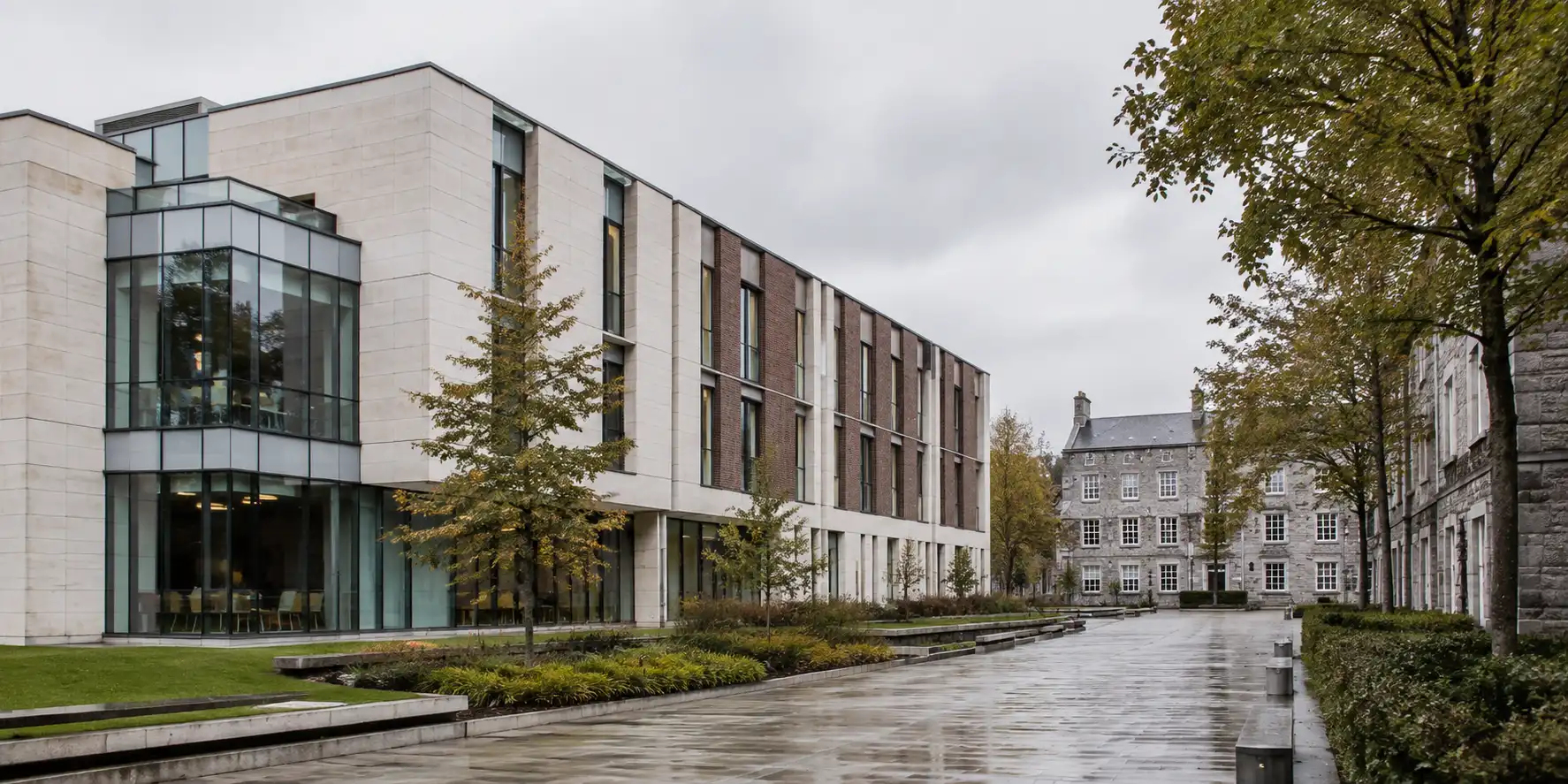
An Irish offer is only the beginning.
Getting an offer from an Irish institution does not answer every important question. The programme, provider, immigration eligibility, finances and post-study options need to work together.
- 01Your profileAcademics, career direction, budget.
- 02ProgrammeThe exact course, not the country.
- 03ProviderInstitution and its authorisation status.
- 04NFQ levelWhere the award sits in the framework.
- 05CostThe whole plan, across every year.
- 06Student visaLong-stay study visa where required.
- 07Stamp 2Study permission and its conditions.
- 08Post-study optionsGraduate permission, where eligible.
Eight decisions, in sequence. Skip one and the rest inherit the problem.
In Ireland, the programme matters more than the brochure.
Two students can hold offers from the same institution and be in very different positions, because the programme they chose is different. Before committing, an international student should be able to answer each of these about the specific course.
The exact programme
Not the department, not the faculty. The named course you would actually enrol on.
Qualification level
Where the award sits on the National Framework of Qualifications.
Awarding body
Who accredits the award, and whether that accreditation is Irish.
Provider eligibility
Whether the provider is authorised to recruit non-EEA students for this programme.
Duration and structure
One year, two years, placement or no placement. Duration changes the cost and the plan.
Curriculum
Module by module. Two similarly named degrees can teach very different things.
Career relevance
Whether the course leads towards the work you intend to do.
Immigration eligibility
Whether the programme meets the requirements that apply to international students.
Don’t assume that every course offered by every institution creates the same immigration pathway.
Before you pay a deposit, check the programme.
Ireland is in the middle of a change in how eligibility for international students is established. Current official guidance states that non-EEA and non-Swiss nationals can only be recruited to programmes listed on the Interim List of Eligible Programmes (ILEP), or to eligible programmes offered by providers authorised to use the TrustEd Ireland statutory quality mark, with the ILEP being superseded by TrustEd Ireland for student immigration purposes.
Both reference points are relevant during the transition. That is precisely why the programme, and not the institution’s name, is the thing to verify before money changes hands.
The specific named course.
The institution delivering it, and its authorisation status.
Whether that combination can lawfully recruit non-EEA students.
Only then does a visa or study permission come into view.
The interim list used as a reference point for study visa and residence decisions. Closed to new programmes and being phased out.
The statutory quality mark awarded by Quality and Qualifications Ireland. Authorised providers and their eligible programmes are published on a list maintained by QQI.
Authorisations have been issued in stages since early 2026 and further decisions are expected. Eligibility should be confirmed against current official sources at the time you apply.
The institution’s name is not enough. The programme itself needs to fit the applicable international-student and immigration requirements.
The level of your qualification matters.
- NFQ 6Higher Certificate / Advanced Certificate
- NFQ 7Ordinary Bachelor Degree
- NFQ 8Honours Bachelor Degree / Higher Diploma
- NFQ 9Master’s Degree / Postgraduate Diploma
- NFQ 10Doctoral Degree
Irish awards are placed on the National Framework of Qualifications, a scale running from level 1 to level 10. For an international student, the level is not a detail. It describes what the qualification is, and it travels with you.
What you can apply for next, in Ireland or elsewhere.
How the course sits relative to similar-sounding alternatives.
The duration of graduate permission available under the Third Level Graduate Programme differs by level, subject to eligibility and conditions.
How the award is read within Ireland’s education system and by employers.
Levels are not interchangeable, and no NFQ level carries an automatic immigration benefit. Conditions apply at every level.
Start with what you want to become.
What you have already studied, and how well.
The role or field you are working towards.
Internships, employment, projects, research.
What you can actually do today.
Once a programme is on the table, it can be evaluated properly. These are the tests we apply before a course goes on a shortlist.
A university shortlist without a programme strategy is incomplete.
Dublin isn’t the whole of Ireland.
Most enquiries arrive naming Dublin. It is the obvious starting point, and for some plans it is the right one. But it is one option among several, and the trade-offs are worth seeing side by side.
Location should be chosen around your programme, career direction, budget and lifestyle.
Studying outside Dublin does not create a better immigration or residency outcome by itself. Anyone telling you that a particular region is an easier route is describing something that does not exist in the rules.
Don’t calculate tuition alone.
A tuition figure is not a budget. The total is what determines whether the plan is affordable, and the funding side has to be built to match it.
Current Irish immigration guidance requires visa-required students on courses of one academic year to demonstrate immediate access to at least €10,000 for living costs, in addition to course fees, with requirements also applying to subsequent years.
This is a financial requirement set for immigration purposes. It is not an estimate of what a year in Ireland will cost you, and it should be checked against current official guidance before you rely on it.
Your visa plan starts with the programme.
For courses longer than three months, visa-required students generally need a long-stay study visa. Ireland’s official process requires evidence covering enrolment, finances, academic ability and English-language ability. None of that can be assembled sensibly until the programme decision is settled.
- 01ProgrammeThe decision everything else rests on.
- 02EligibilityProgramme and provider status confirmed.
- 03Letter of acceptanceIssued by the institution.
- 04FeesPaid as the current rules require.
- 05Financial evidenceDemonstrated, not improvised.
- 06Medical insurancePrivate cover, as required.
- 07Long-stay study visaThe outcome of the plan, not the plan.
Visa preparation begins with choosing a programme that makes sense.
Can you fund the entire Irish plan?
A one-year plan and a two-year plan are financially different propositions. Both years need to be accounted for before an application is submitted.
Funding should be planned before the application, not after the offer.
Official Irish guidance specifically requires students to demonstrate that they can support themselves without relying on public funds or casual employment. A plan that only works if a part-time job materialises is not a funded plan.
Part-time work is a supplement, not a funding strategy.
During term time.
During specified holiday periods.
These are the limits current guidance permits for eligible Stamp 2 students. They are ceilings on what is allowed, not a description of what you will earn or the hours you will find.
Do not build your education budget around part-time work.
Ordinary part-time work taken alongside your studies, subject to the hour limits above.
A placement or internship that forms part of the programme is treated differently. Current Irish guidance sets out specific provisions for eligible academic placements, with their own conditions. Whether a particular placement qualifies depends on how the programme is structured.
What is Stamp 2?
Stamp 2 is the immigration permission associated with eligible full-time study in Ireland. It is granted for the purpose of studying a specific programme, it is registered and renewed, and it carries conditions attached to that purpose.
Stamp 2 is a study permission, not a general residence status, and it is not in itself a route to permanent residence. Time spent on it is bounded by the conditions of the permission.
What happens after graduation?
Current official guidance provides a Third Level Graduate Programme for eligible Irish graduates. It grants permission on Stamp 1G so that a graduate can look for graduate-level employment. What follows after that depends on finding the employment and meeting the requirements of an employment permit route.
- 01Irish qualificationAn award from a recognised Irish awarding body.
- 02Stamp 1GGraduate permission under the Third Level Graduate Programme, where eligible.
- 03Graduate-level employment searchThe purpose of the permission. Not a guarantee of a job.
- 04Employment permit where eligibleRoutes such as the Critical Skills Employment Permit have their own criteria, including role and salary requirements.
- 05Potential longer-term pathPossible, conditional, and dependent on the rules in force at the time.
Graduates with an award at NFQ Level 8 may receive up to 12 months. Eligible graduates with an award at NFQ Level 9 or above may receive up to 24 months, granted as an initial 12 months and a renewal on satisfying the authorities that steps have been taken to find graduate-level employment. Cumulative limits on total time in Ireland as a student apply.
Stamp 1G is permission to seek graduate-level work. It is not an employment permit, not a settlement route, and not an automatic pipeline. Anyone presenting Ireland as study, then graduate permission, then permanent residence is selling you a sequence that the rules do not describe.
Eligibility, durations and conditions change. Confirm the position against current official Irish Government and Immigration Service Delivery guidance before making decisions.
Your qualification level can change the post-study picture.
This is the comparison most worth making carefully if you are weighing a Bachelor’s against a Master’s, or a Master’s against a higher-level qualification.
Graduate permission under the Third Level Graduate Programme, subject to eligibility and conditions.
Granted as an initial 12 months, with a renewal available where the graduate satisfies the authorities that appropriate steps have been taken towards graduate-level employment.
Duration is one input among several. A longer graduate permission is not a reason to choose a programme that does not fit your career direction, and eligibility conditions apply in every case.
Can your family come with you?
Current official student guidance states that students are typically not permitted to bring family members with them, with exceptional circumstances potentially applying.
Ireland’s student route does not generally operate as a family-accompaniment route. Specific exceptions may exist, so individual circumstances should be checked against current immigration rules.
If family accompaniment is essential to your plan, that is a reason to establish the position early rather than late. It may also be a reason to compare Ireland against destinations whose rules work differently.
Ireland should be compared with your alternatives.
There is no best country. There is a best fit for a given profile, budget and career direction. These are the dimensions worth comparing, qualitatively, before you commit.
Comparable one-year taught Master’s culture and English-medium study, with a different visa framework, fee structure and post-study regime. Worth comparing directly against Ireland on cost and course fit.
Study in UKLonger typical postgraduate duration, different living-cost profile and a different work-rights and post-study framework. Distance and total plan cost usually decide this comparison.
Study in AustraliaTypically two-year Master’s, the widest range of programmes and research funding, higher tuition, and an entirely separate visa and post-study structure.
Study in USALow or no tuition at public universities, a different funding-proof mechanism, and a language environment that varies by programme. Often the strongest cost comparison against Ireland.
Study in GermanyA different institutional mix, cost base and immigration framework, with rules that have moved considerably in recent years. Compare on current requirements, not on reputation.
Study in CanadaCompared qualitatively on programme structure, duration, tuition, living costs, work rights, post-study options, visa considerations, career fit and language environment. No ranking is implied and no immigration outcome is promised.
Who should seriously consider Ireland?
Students who value:
Who should think twice?
Students for whom:
Both lists are equally useful. Knowing Ireland is the wrong fit is a good outcome of an assessment, not a failed one.
Admission is only one decision.
Programme Strategy
We help determine what you should study before deciding where.
Provider & Eligibility Check
We consider whether the programme and provider fit the applicable international-student framework.
Financial Planning
We assess the complete cost rather than just tuition.
Admission + Visa Planning
The visa is considered as part of the education plan.
Post-Study Planning
We explain the current graduate and employment framework without selling migration promises.
One Ireland plan. From profile to departure.
- 01, Profile Assessment
Academic background, career direction and constraints.
- 02, Programme Planning
Identify appropriate courses.
- 03, Provider Selection
Evaluate institutions and programme eligibility.
- 04, Financial Planning
Calculate the complete education plan.
- 05, Application
Prepare and submit applications.
- 06, Offer Evaluation
Compare offers intelligently.
- 07, Visa Planning
Prepare the long-stay Student visa application.
- 08, Pre-Departure
Prepare for accommodation, travel and arrival.
Sometimes the right advice is: Don’t apply yet.
We’d rather help you choose the right country than process the wrong application.
Two ways of answering the same question.
Frequently asked questions
Does every course at an Irish university qualify for a student visa?
No. Non-EEA and non-Swiss students can only be recruited to programmes listed on the Interim List of Eligible Programmes (ILEP) or to eligible programmes offered by providers authorised to use the TrustEd Ireland quality mark. The institution’s reputation alone does not establish eligibility, the specific programme must meet the applicable requirements.
How much money do I need to show for an Ireland student visa?
Current Irish immigration guidance requires visa-required students on courses resulting in residence of more than eight months to show immediate access to at least €10,000, described as the estimated living cost for one academic year, in addition to course fees. Requirements for subsequent years also apply. Always check the current official guidance before applying.
How many hours can a student work in Ireland on Stamp 2?
Eligible Stamp 2 students may work up to 20 hours per week during term time and up to 40 hours per week during specified holiday periods. Part-time work should not be treated as a substitute for financial capacity, official guidance requires students to show funds without relying on casual employment.
What is Stamp 1G and how long does it last?
Stamp 1G is the permission granted under the Third Level Graduate Programme so that eligible graduates can seek graduate-level employment. Graduates with an NFQ Level 8 award may receive up to 12 months. Eligible graduates with an award at NFQ Level 9 or above may receive up to 24 months, granted as 12 months followed by a renewal. Conditions and cumulative time limits apply.
Can I bring my family with me on an Irish student visa?
Current official student guidance states that students are generally not permitted to bring family members with them, although exceptional circumstances may apply. Ireland’s student route should not be planned as a family-accompaniment route; individual circumstances should be checked against current immigration rules.
What is NFQ and why does the level matter?
The National Framework of Qualifications places Irish awards on levels from 1 to 10. For an international student, the level of the award affects academic progression, how the qualification is positioned, and post-study options, for example, the duration of graduate permission available under the Third Level Graduate Programme.
Is Ireland right for you?
Tell us about your academic background, career goals and budget. We’ll help you evaluate Ireland as part of your wider study-abroad plan.
Send your details
Fill in the form below and we will come back with an honest read on whether Ireland fits your profile, and how it compares with the other destinations we advise on. Best if your situation needs thinking about: a refusal, a funding question, or a programme you are unsure about.
We read every enquiry ourselves and reply within one working day.
Chat with us instead 24/7
Chat support runs around the clock, so a quick question never has to wait for office hours. Deadlines, programme eligibility, financial evidence, or simply where to start.
Open WhatsApp chatAvailable 24/7, including weekends.
Planning for the 2027–28 intake