F1 visa slots for Fall 2026: The real strategy
Estimated reading time: 6 minutes
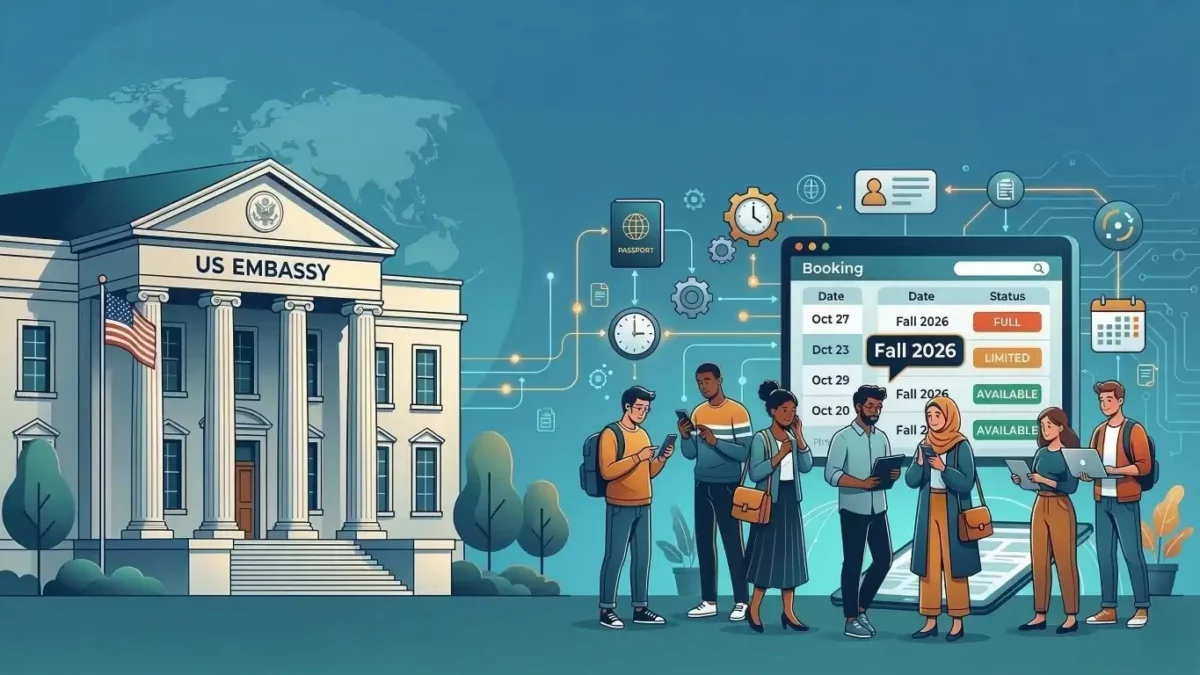
Every year around March and April, thousands of Indian students begin refreshing the U.S. visa appointment portal repeatedly, hoping to secure F1 visa slots for Fall 2026 intake.
Telegram groups start buzzing.
Students begin sharing screenshots of slot openings.
And suddenly, the entire process feels like a race.
But after working with students for years at Bluehawks EduAbroad, we have noticed something interesting.
Getting a visa slot early is important.
But getting the visa approved is far more important.
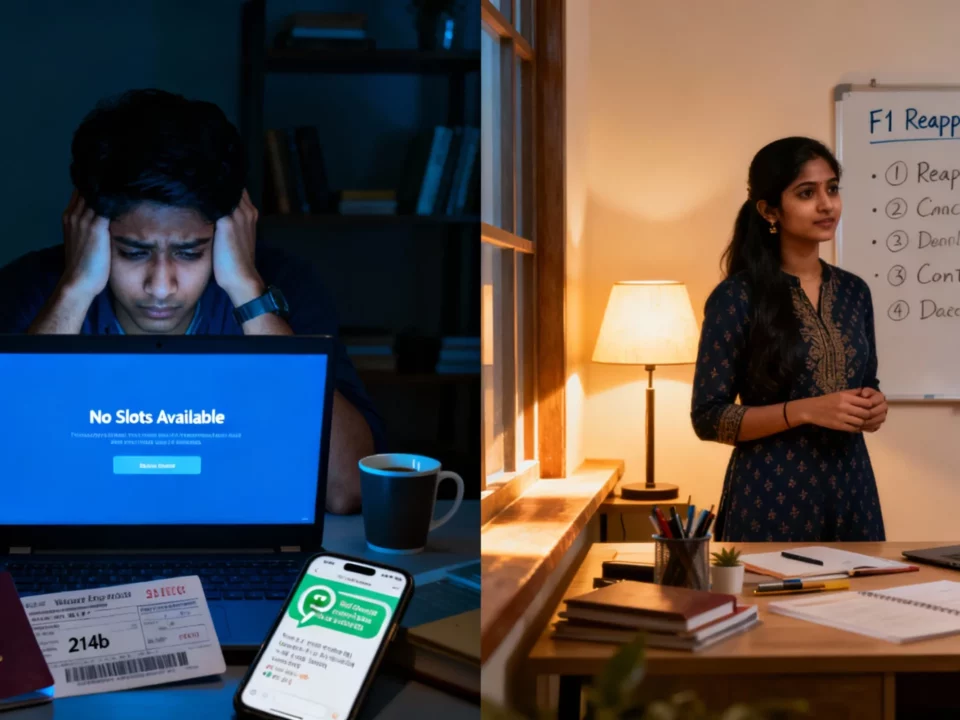
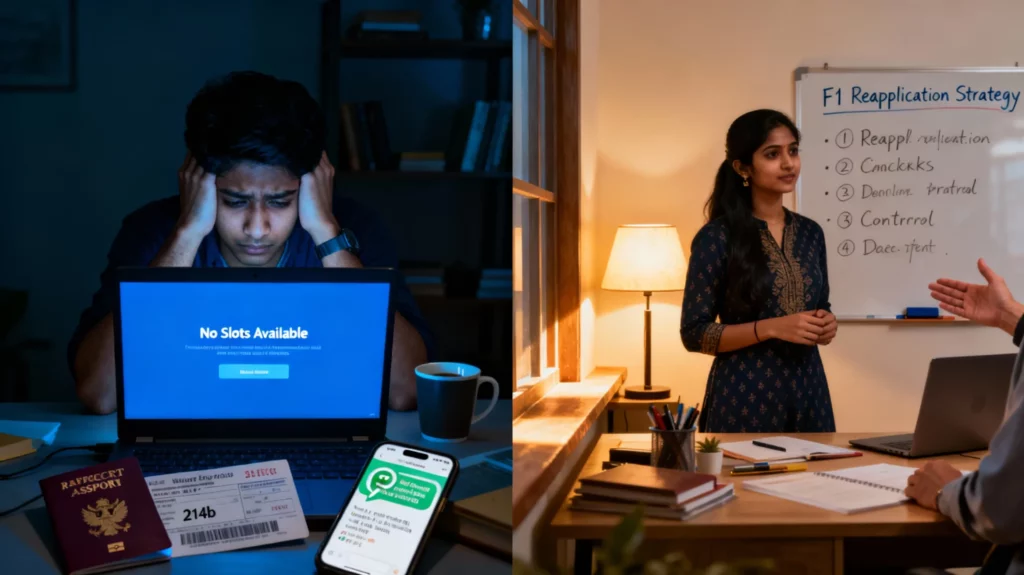
Many students secure appointments in time yet still walk out of the U.S. consulate with a 214(b) refusal.
So in this guide, we will cover:
- When F1 visa slots for Fall 2026 are expected to open
- How the slot release pattern usually works in India
- Why some students secure visas as early as May
- And the biggest misunderstanding about the F1 visa interview that leads to refusals.
Table of contents
- When Will F1 Visa Slots for Fall 2026 Open?
- A Real Example: How Uma Maheshwar Secured His Visa Early
- Beware of “Guaranteed Visa Slot” Scams
- How We Track Visa Slot Availability
- The Biggest Myth About F1 Visa Interviews
- Why Most F1 Visa Refusals Actually Happen
- The Question Students Often Misinterpret
- The Mindset Shift That Changes Everything
- Final Thoughts: Preparing for Fall 2026
When Will F1 Visa Slots for Fall 2026 Open?
While the U.S. embassy never officially publishes slot release schedules, patterns from the past few years give a fairly clear idea.
For Fall intake students, the visa interview typically happens between April and July.
This is because the F1 visa interview can generally be scheduled up to 120 days before the program start date mentioned on the I-20.
Most Fall semester programs start in August or early September, which means visa appointments begin appearing from April onward.
Expected Timeline for Fall 2026
| Stage | Expected Timeline |
|---|---|
| Universities issue I-20 | Feb – May 2026 |
| DS-160 submission | March – May |
| Visa slots begin opening | April – June |
| Interview window | April – July |
| Peak visa approvals | May – June |
Students who prepare their documentation early usually secure earlier appointments and less stressful timelines.
A Real Example: How Uma Maheshwar Secured His Visa Early
One of our students, Uma Maheshwar from Hyderabad, India, who is currently pursuing his MS in Data Science in the United States, is a great example of how preparation changes everything.
Uma was part of the Fall 2024 intake.
Instead of waiting for the last moment, he followed a disciplined timeline:
- I-20 ready early
- DS-160 submitted quickly
- SEVIS fee paid immediately
Because everything was ready, he secured his visa slot early in the cycle.
By May itself, Uma had already completed his visa interview and received his approval.
While many students were still struggling to find appointments in June and July, he was already preparing for his departure.
The lesson here is simple:
Visa success often starts long before the interview.
Beware of “Guaranteed Visa Slot” Scams
Every year when visa demand increases, a new category of services suddenly appears online.
They promise things like:
- “Guaranteed visa slots”
- “Premium booking access”
- “Priority embassy slots”
Usually, these services demand extra payments to secure appointments.
At Bluehawks EduAbroad, we strongly advise students to avoid such practices completely.
Why?
Because these methods often involve:
- bot activity
- unauthorized scheduling manipulation
- misuse of appointment systems
If the embassy detects irregular activity, it may lead to:
- appointment cancellation
- account suspension
- or even future visa bans
A visa appointment should always be booked through legitimate processes.
How We Track Visa Slot Availability
Students often rely heavily on slot tracking tools such as
- checkvisaslots
- visa tracker websites
- telegram alert groups
While these tools may sometimes help identify patterns, they should never be the only strategy.
At Bluehawks EduAbroad, we maintain a dedicated team that actively monitors visa slot availability patterns.
Instead of depending entirely on automated trackers, we analyze:
- release timing trends
- embassy capacity changes
- sudden bulk slot releases
This approach allows us to guide students more effectively during the visa season.
The Biggest Myth About F1 Visa Interviews
Many students believe that once they secure a visa slot, the rest of the process is simple.
They assume the interview works like a college viva.
Answer the question.
Explain your situation.
Provide more details if needed.
Unfortunately, the F1 visa interview does not work that way.
And this misunderstanding leads to a large number of refusals.
Why Most F1 Visa Refusals Actually Happen
Based on years of observing visa outcomes, refusals usually happen due to two major reasons.
1. Treating the DS-160 Like Just Another Form
The DS-160 is not merely a data collection form.
It is the foundation of your entire visa profile.
Yet many students fill it casually.
For example, the text boxes that ask:
- “Explain your current duties”
- “Have you ever been refused a U.S. visa?”
often receive generic responses like basic job descriptions.
This pattern is particularly common in applications handled by traditional agents who process large volumes of applications on commission structures.
When applications are handled in bulk, the focus shifts to speed instead of precision.
But the F1 visa process in 2026 requires a much deeper level of understanding.
Students who rely on outdated approaches from the 2018 era of mass applications often struggle in the current environment.
2. Thinking the Interview Is Just About Answering Questions
This is perhaps the most misunderstood aspect of the F1 visa process.
Students often walk out of interviews frustrated.
They say things like:
“But I answered all the questions.”
or
“The visa officer did not even give me a chance to explain my assets.”
What they fail to understand is that the interview is not simply about answering questions correctly.
It is about demonstrating clarity, credibility, and intent within a very short interaction.
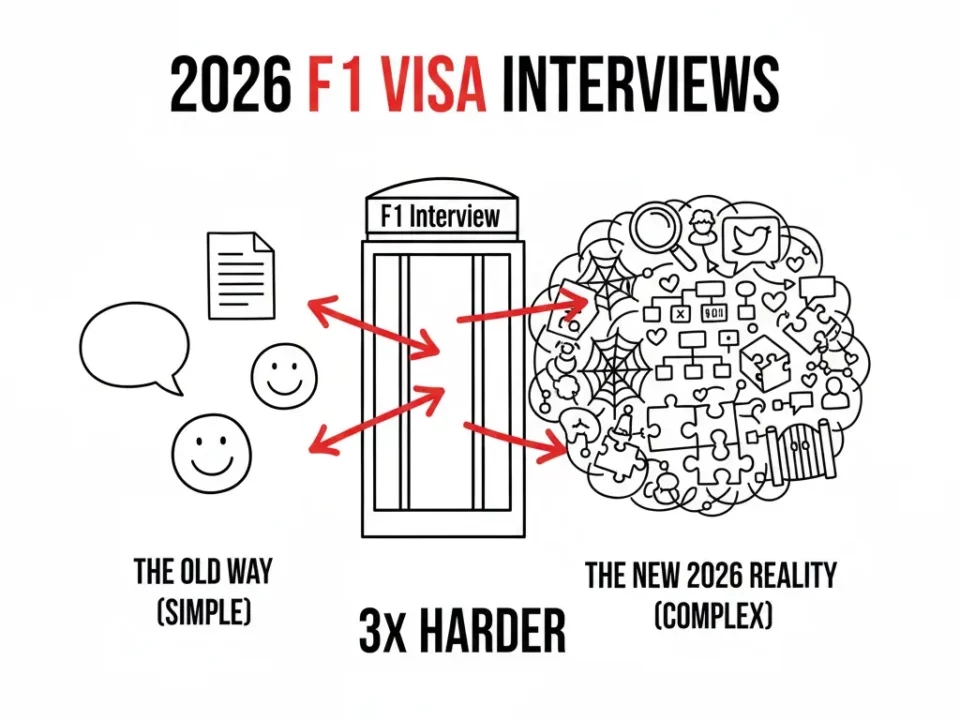
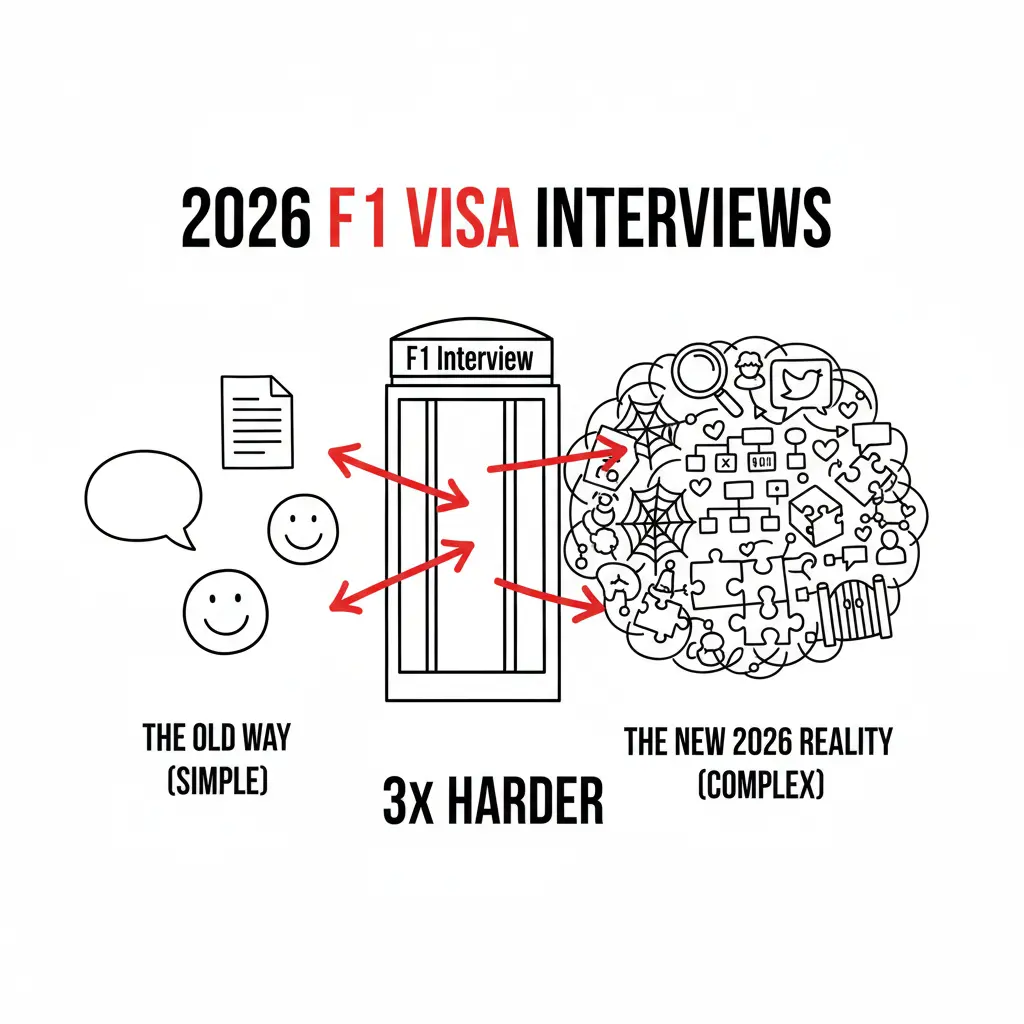
2026 F1 Visa Interviews Just Became 3x Harder.
The Question Students Often Misinterpret
Consider a common question asked during visa interviews.
“Which university are you going to?”
Most students respond with something like:
“XYZ University.”
Or slightly more formally:
“Officer, I will be going to XYZ University.”
From the student’s perspective, the answer seems correct.
But there is something important they are missing.
The visa officer already knows this information.
The university name is already present in:
- your I-20
- your DS-160
- the digital profile opened on the officer’s screen
So why would the officer ask it again?
Is the officer simply trying to confirm the university name?
Or are they actually evaluating something deeper?
In reality, the officer is trying to assess your understanding of the decision you have made.
They are trying to hear:
- why you chose that university
- how the program connects to your background
- whether you understand the academic direction you are pursuing
In other words, the question is not just about where you are going.
It is about why you are going there.
Students who understand this difference approach the interview very differently.
And that difference often determines whether the visa is approved.
The Mindset Shift That Changes Everything
One of the most interesting transformations we observe is what happens when rejected students speak with us.
Initially, they are often upset.
They believe the visa officer made a mistake.
But once they begin understanding how the visa process actually works, their perspective changes completely.
They start realizing that the interview is not about reciting answers.
It is about demonstrating clarity of purpose.
When students finally internalize this concept, their entire approach to the interview shifts.
And that is when approvals begin to happen.
Final Thoughts: Preparing for Fall 2026
If you are planning for the Fall 2026 intake, remember three important things.
First, prepare your documents early so you can secure a visa slot when they open.
Second, avoid risky practices such as paid slot manipulation.
And third, invest time in understanding how the F1 visa process actually works, rather than simply memorizing interview answers.
Because in the end, getting a visa slot is only the beginning.
The real success lies in getting the visa approved.
🙋♂️ Chat with our 24/7 support team! Just tap the WhatsApp button in the bottom right corner ↘️🟢