Germany Bachelor’s After Class 10: Requirements & Competition
Estimated reading time: 4 minutes
Planning a Germany Bachelor’s after Class 10 is one of the smartest academic decisions an Indian student can make — provided it is done early and strategically. Germany offers globally respected degrees, extremely low tuition at public universities, and strong career prospects. However, unlike many destinations, it does not accommodate last-minute planning.
In fact, most students who begin thinking about Germany in Class 12 discover that they must take longer routes such as Studienkolleg, additional language preparation, or even a year of study in India.
Therefore, if Germany is your goal, the journey ideally starts right after Class 10.
Table of contents
- Why Plan Germany Bachelor’s After Class 10
- Choosing the Right Stream After Class 10
- German Language: The Biggest Early Advantage
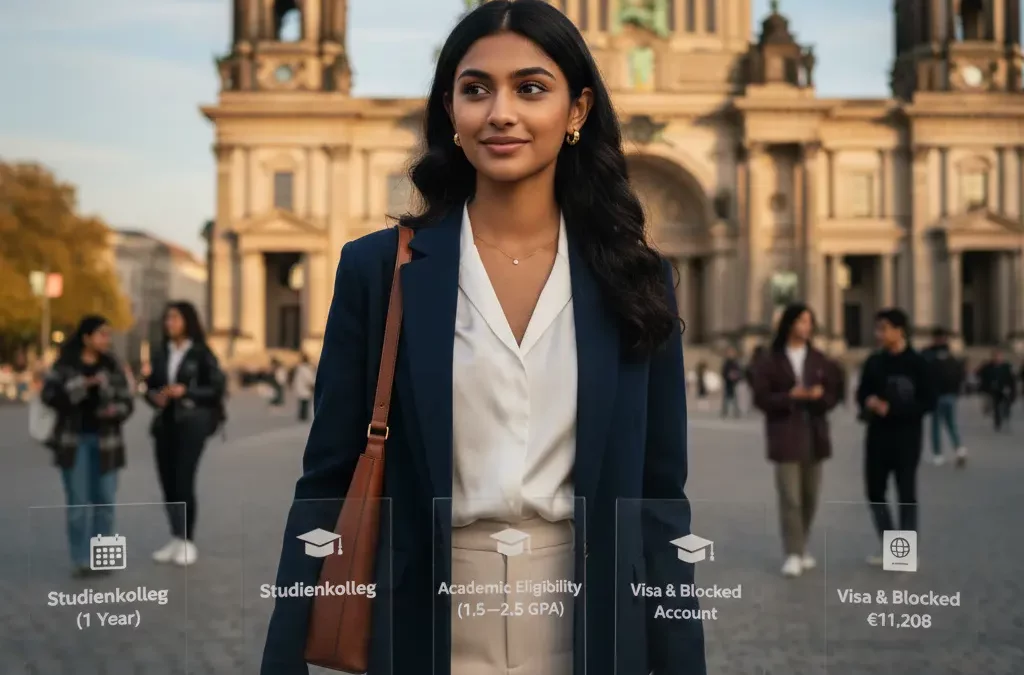
- Understanding the Studienkolleg Pathway
- Top German Public Universities 2026 for Bachelor’s (Reference Guide)
- What Makes Admission Competitive?
- Key Financial & Visa Requirements
- Why Students from Different Boards Need Specialized Guidance
- How Bluehawks EduAbroad Helps Students Succeed
- Ideal Timeline for Germany Bachelor’s After Class 10
- Final Thoughts: Germany Rewards Strategy, Not Speed
Why Plan Germany Bachelor’s After Class 10
Germany does not consider Indian Class 12 automatically equivalent to the German Abitur. As a result, eligibility depends on subjects, board, academic performance, and language proficiency.
Students planning a Germany Bachelor’s after Class 10 gain the advantage of aligning these factors early, while late planners often lose time rather than opportunity.
Common challenges for late planners include:
- Insufficient German language level
- Wrong subject combination
- Missing eligibility criteria
- Delayed admission timelines
- Limited university options
Choosing the Right Stream After Class 10
Your Class 11 subjects determine which programs you can pursue in Germany.
Engineering / IT / STEM → PCM required
Medicine / Life Sciences → PCB required
Business / Economics → Commerce acceptable (Math recommended)
Because German universities are strict about subject relevance, early decisions prevent future roadblocks.
German Language: The Biggest Early Advantage
Most public bachelor’s programs in Germany are taught in German. Typical requirement:
👉 B2–C1 German proficiency
Reaching this level usually takes 18–30 months. Therefore, students planning a Germany Bachelor’s after Class 10 can complete language preparation alongside school, dramatically accelerating their timeline.
Understanding the Studienkolleg Pathway
For many Indian students, Studienkolleg serves as the bridge to German public universities.
Typical sequence:
Class 12 → German B2 → Entrance Exam → 1-Year Foundation → Bachelor’s
Early planners, however, enter this stage well prepared, increasing their chances of securing limited seats.
Top German Public Universities 2026 for Bachelor’s (Reference Guide)
The universities below are highly relevant for students planning a Germany Bachelor’s after Class 10, especially in engineering, sciences, and business fields.
Technical & Engineering Universities
| University | Popular Bachelor’s Fields | Typical Requirements | Competitiveness |
|---|---|---|---|
| Technical University of Munich (TUM) | Engineering, Informatics, Sciences | Very high grades, B2–C1 German, strong math | ⭐⭐⭐⭐⭐ Very High |
| RWTH Aachen University | Mechanical, Automotive, CS | PCM + Studienkolleg T-Course | ⭐⭐⭐⭐⭐ Very High |
| Karlsruhe Institute of Technology (KIT) | Engineering, Physics, CS | Strong academics, German B2–C1 | ⭐⭐⭐⭐ High |
| University of Stuttgart | Aerospace, Mechanical | Strong PCM, German proficiency | ⭐⭐⭐⭐ High |
| TU Berlin | Engineering, Architecture, CS | PCM + Studienkolleg common | ⭐⭐⭐⭐ High |
Business, Science & Multidisciplinary Universities
| University | Popular Bachelor’s Fields | Typical Requirements | Competitiveness |
|---|---|---|---|
| University of Hamburg | Business, Economics, Sciences | Subject relevance, German B2–C1 | ⭐⭐⭐ Moderate–High |
| University of Cologne | Business, Social Sciences | Strong academics + language | ⭐⭐⭐ Moderate–High |
| University of Mannheim | Business & Economics | Excellent grades, German C1 | ⭐⭐⭐⭐ High |
| Goethe University Frankfurt | Economics, Finance | Strong math + language | ⭐⭐⭐⭐ High |
What Makes Admission Competitive?
Admission to German public universities is merit-based and capacity-limited.
Key factors influencing competitiveness include:
- Academic performance
- Subject alignment
- Language proficiency
- Entrance exams (if applicable)
- Program popularity
- Limited seats in NC programs (Numerus Clausus)
Consequently, planning a Germany Bachelor’s after Class 10 allows students to build a profile that matches these expectations.
Key Financial & Visa Requirements
Beyond academics, students must meet legal requirements:
- APS Certificate (India-specific verification)
- Student visa approval
- Blocked account (~€11,208 per year)
- Health insurance
- Accommodation planning
Preparing these early reduces last-minute stress.
Why Students from Different Boards Need Specialized Guidance
Eligibility pathways differ significantly between CBSE, ISC, state boards, IB, A-Levels, and diploma routes. Therefore, generic advice can be misleading.
Each profile requires customized planning regarding:
- Direct entry vs Studienkolleg
- Subject equivalence
- Language timeline
- University targeting
- Documentation
How Bluehawks EduAbroad Helps Students Succeed
Bluehawks EduAbroad focuses on structured planning for students targeting German public universities from diverse educational backgrounds.
Their support includes:
- Personalized eligibility assessment
- Strategic pathway planning starting as early as Class 10
- University shortlisting based on realistic competitiveness
- Studienkolleg guidance
- Documentation accuracy and APS compliance
- Transparent advice not driven by commissions
- High quality advise on German Study Visa Application Process
Because Germany rewards preparation over shortcuts, expert guidance significantly improves success rates.
Ideal Timeline for Germany Bachelor’s After Class 10
Class 9–10: Explore Germany, begin German Language A1 and A2 Prep
Class 11: Strengthen academics, reach B1 level
Class 12: Achieve B2/C1, prepare applications
Post-12: Studienkolleg or direct entry
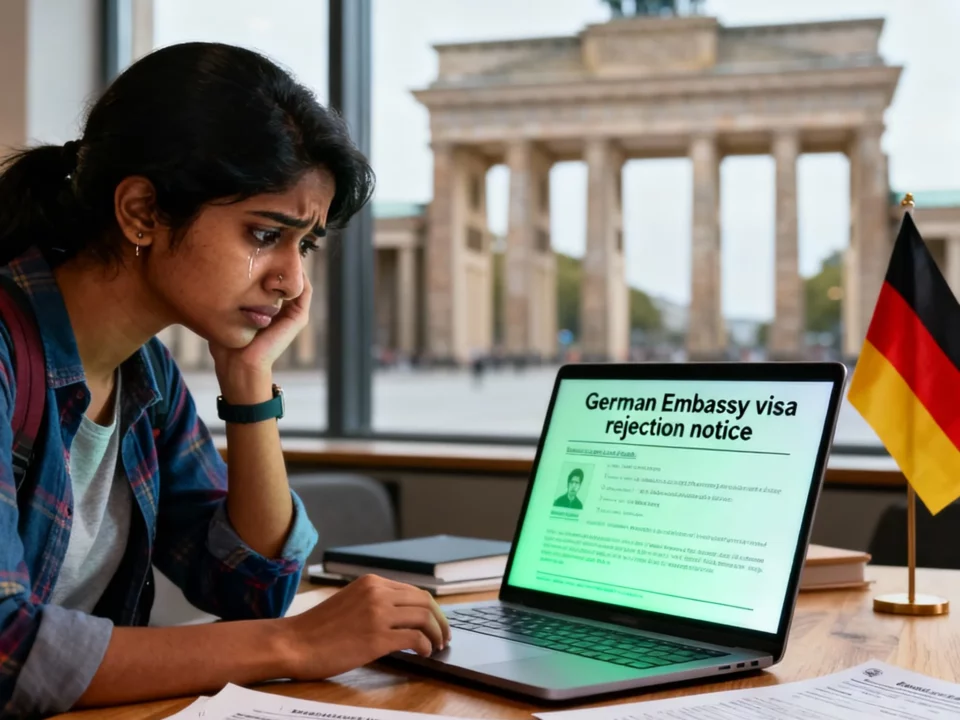
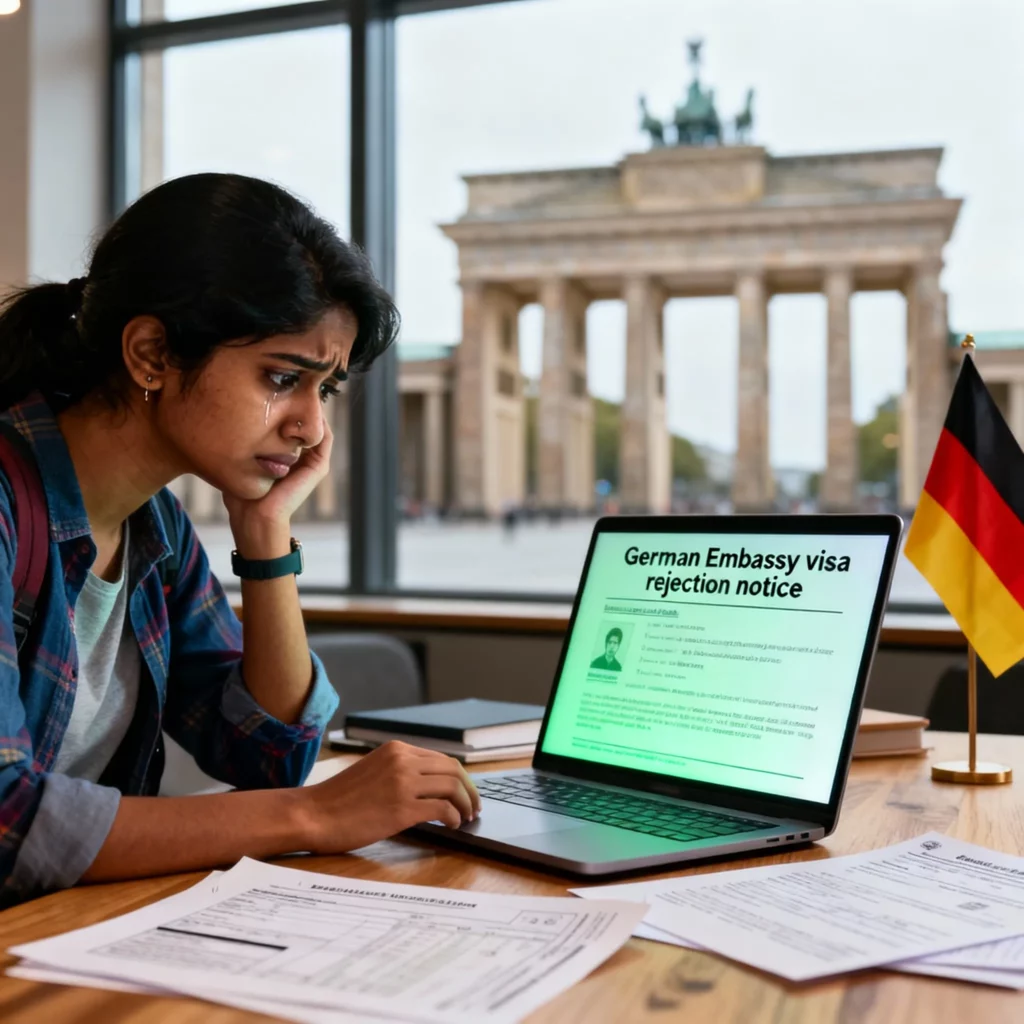
Early planners typically reach their bachelor’s faster and at lower cost. Moreover early planning almost totally avoids the German Visa Refusal.
Final Thoughts: Germany Rewards Strategy, Not Speed
A Germany Bachelor’s after Class 10 is not about rushing abroad — it is about building the right foundation. Students who plan early gain access to top universities, lower costs, and smoother admission pathways.
Those who delay planning rarely lose the opportunity, but they almost always lose time.
If Germany is your dream destination, the smartest move is to start preparing immediately after Class 10 — not when school is about to end.
🙋♂️ Chat with our 24/7 support team! Just tap the WhatsApp button in the bottom right corner ↘️🟢