F1 Visa Refusal Rate for Indian Students: Complete 2027 Analysis & Strategic Guide


Estimated reading time: 9 minutes
Last updated: September 2026. Data sourced from State Department FOIA disclosures analyzed by Shorelight, with additional reporting from Inside Higher Ed.
If you are planning to study in the U.S. in 2027, you need to look at the numbers plainly. The landscape for Indian students has shifted fundamentally over the last few years, and the old way of preparing for a visa interview simply doesn’t work anymore. Two years ago, roughly one in three Indian applicants faced rejection. Today, it’s more than half.
Table of contents
- The F1 Visa Refusal Rate Has Hit a Decade High
- Why Indian Students Face the Highest Refusal Rate Globally
- Why “Just Speak Confidently” Doesn’t Work
- The Section 214(b) Trap: What Visa Officers Are Really Assessing
- The DS-160 Form: Your First and Most Critical Interview
- Beyond Finance: Why Your Story Matters More Than Your Bank Balance
- High-Risk Profiles for 2027
- Regional Patterns Across Indian Consulates
- Proven Strategies for Success in the 2027 Visa Season
- What to Do If You’ve Already Been Refused
- Frequently Asked Questions
- Key Takeaways for 2027
- Get Expert Guidance on Your Case
The F1 Visa Refusal Rate Has Hit a Decade High
The most recent data confirms that the F1 visa refusal rate for Indian applicants reached 61% in 2025, according to Shorelight’s analysis of State Department records. This isn’t a small dip; it’s part of a sharp, sustained climb that has caught many students and even some consultants off guard.
Here is how the numbers have progressed:
| Year | India F-1 Refusal Rate | Global F-1 Refusal Rate |
|---|---|---|
| 2023 | 36% | ~29% |
| 2024 | 53% | 31% |
| 2025 | 61% | 35% |
The headline is clear: Indian applicants now face a refusal rate nearly double the global average. While the rest of the world saw a 10-year high of 35%, India’s 61% rate represents targeted scrutiny that every 2027 applicant needs to understand before they even start their application.
Why Indian Students Face the Highest Refusal Rate Globally
If the F1 visa refusal rate for Indians is so much higher than the rest of the world, there have to be specific reasons behind it. A few systemic factors stand out.
The H-1B Pathway Concern
Visa officers are trained to identify applicants who might be using the F1 visa as a gateway to a U.S. work visa. Since Indian students statistically have the highest rate of transitioning to H-1B sponsorship after graduation, officers often walk into the interview already primed to look for signs of immigrant intent.
Post-Pandemic Policy Shifts
Since 2024, U.S. consulates in India have tightened their interpretation of Section 214(b) of the Immigration and Nationality Act, the law that presumes every applicant intends to immigrate unless they prove otherwise.
Expanded Digital Vetting
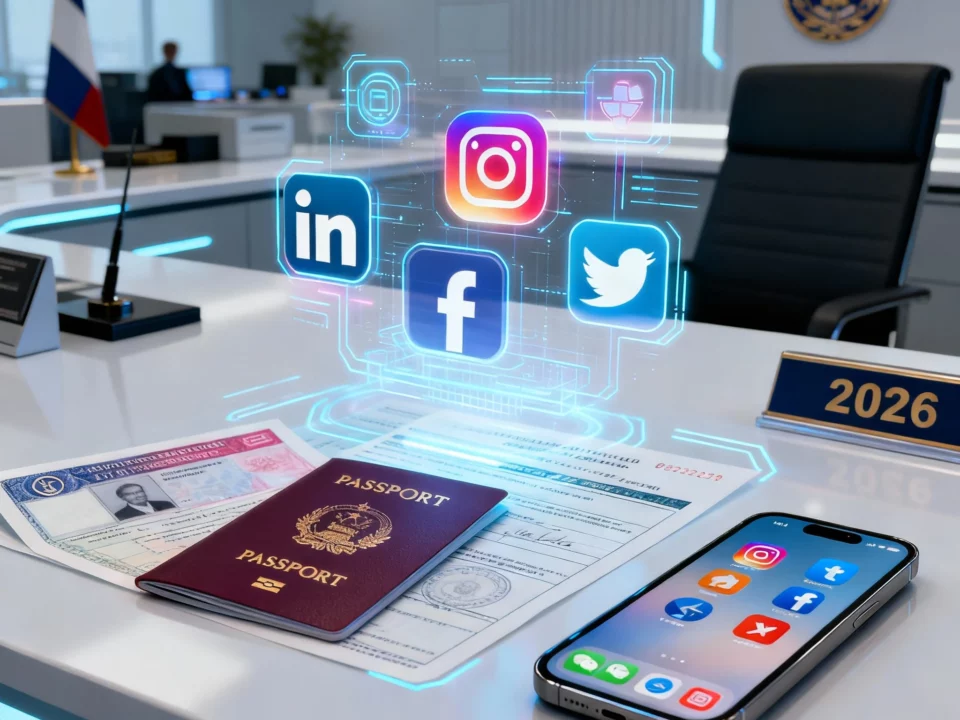
Starting in mid-2025, the U.S. State Department began systematically cross-referencing DS-160 claims with social media platforms including LinkedIn, Instagram, and X. Inconsistencies between a student’s stated intent and their online footprint are now a documented factor in refusals.
Why “Just Speak Confidently” Doesn’t Work
This is probably the biggest misconception we see among students, and it’s worth addressing directly because it’s costing people their visas.
A lot of applicants, and unfortunately a lot of consultants, treat the F1 interview like a conversation you can win with confidence and good English. Practice a few answers, sound calm, smile, and you’ll get through. That mindset is exactly what leads to rejection under the current F1 visa refusal rate environment.
Here’s the reality: visa officers aren’t scoring you on charisma. They are auditing your story for logical coherence. Confidence without a coherent narrative just means you sound convincing while contradicting yourself. Officers are trained to spot rehearsed answers that don’t actually connect to a real, consistent plan. A nervous student with a clear, logical story about why they need this specific degree and why they’re returning to India will almost always outperform a smooth talker whose story has gaps.
In our work with students after refusal, this is the pattern we see over and over. It’s rarely about English fluency or nervousness in the room. It’s a story that doesn’t hold together; a Master’s in Finance chosen for “better opportunities” with no specific reasoning, or work experience that has no real connection to the program being applied for. The interview isn’t a conversation to charm your way through. It’s a coherence test.
The Section 214(b) Trap: What Visa Officers Are Really Assessing
When you hear about an F1 visa refusal rate, the underlying reason is almost always Section 214(b). In plain terms, you’re presumed to be an intending immigrant until you prove otherwise. Officers typically make this determination in about three to five minutes, based on four areas.
Academic Intent
Does the program genuinely fit your career path? Generic answers like “it’s a highly ranked school” no longer hold up. Officers want to see specifically how the coursework fills a real gap in your background.
Financial Credibility
It’s not just about having money; it’s whether the story behind the money makes sense. Sudden large deposits or vague sponsors get flagged more than ever.
Home-Country Ties
This is where most Indian applicants fail. You need a clear reason to return to India, whether that’s family responsibilities, a specific professional niche, or a role that requires exactly this degree.
Immigration Signals
Are there signs you’re already planning a life in the U.S.? Mentioning H-1B plans or having a LinkedIn profile signaling “open to work in USA” are significant red flags.
The DS-160 Form: Your First and Most Critical Interview
Many students treat the DS-160 as a clerical task and hand it off to an agent. In a 61% refusal environment, that’s a risky move. The DS-160 is the only document the officer reads before you speak. If your written answers are generic but your verbal answers are specific, or vice versa, the officer sees a contradiction immediately. You need to personally own every word on that form, because you’ll be asked to explain it on the spot.
Beyond Finance: Why Your Story Matters More Than Your Bank Balance
A common belief in India is that a large bank balance guarantees visa approval. It doesn’t. If an officer already suspects immigrant intent, no amount of money changes that judgment. In some cases, an unusually large surplus actually raises more questions than it answers. A well-articulated, logical career plan backed by modest and credible funding consistently outperforms a weak story propped up by a large bank statement.
High-Risk Profiles for 2027
Certain applicants face a meaningfully higher F1 visa refusal rate than others.
Tech Professionals Aged 25-32
The classic H-1B demographic. Officers often assume the move is for salary rather than education unless proven otherwise with specifics.
Career Changers
If your background is in one field and you’re suddenly applying for a Master’s in an unrelated one, you carry a heavier burden of proof.
Second Master’s Applicants
Pursuing a second degree at the same academic level in the U.S. is increasingly treated as a red flag for immigrant intent.
Regional Patterns Across Indian Consulates
It’s worth noting that official, consulate-by-consulate refusal data isn’t published by the State Department. What follows reflects patterns reported by education consultants and advisory firms working directly with students, not official government figures.
| Consulate | Reported Scrutiny Level | Common Concerns |
|---|---|---|
| Delhi | Very High | 214(b) intent, home-tie verification |
| Bangalore | Very High | Tech and H-1B pathway concerns |
| Mumbai | High | Financial consistency, professional background |
| Hyderabad | High | Academic alignment, funding sources |
| Chennai | Moderate | Slightly more weight on academic merit |
These patterns are useful for context, but they shouldn’t be treated as a scientific breakdown. The strength of your application matters far more than which consulate you’re assigned to.
Proven Strategies for Success in the 2027 Visa Season
If you want to beat the current F1 visa refusal rate, here’s what actually moves the needle.
Build a Narrative Before You Build a Form
Your DS-160 and your interview answers should be the output of a coherent story, not the other way around. Start with why this specific program, why now, and what happens when you return to India, then fill in the paperwork to match.
Audit Your Digital Footprint
Make sure your LinkedIn and other social accounts don’t contradict your stated intent. This is now an active part of the vetting process.
Show Sufficiency, Not Wealth
Focus on funds that are credible and consistent with your family’s financial background, not the largest number you can produce.
Practice With Someone Who Understands Current Consular Behavior
Rehearsed confidence without a coherent story is what’s currently getting rejected at scale.
Apply Early in the Season
Interviews scheduled between January and March tend to avoid some of the volume-driven fatigue seen later in the cycle.
What to Do If You’ve Already Been Refused
If you’ve faced a refusal, the most important thing to understand is that it’s very rarely about how you spoke in the room. In our experience working specifically with refused applicants, the pattern is almost always a narrative gap that existed before the interview even started, not something that happened in the three minutes with the officer.
Most agencies focus heavily on paperwork, translations, and logistics. Very few actually go back and rebuild the story that fell apart under Section 214(b) scrutiny. That’s the specific gap we work in. Rather than treating a refusal as bad luck, we treat it as diagnostic information: it tells us exactly where the story didn’t hold together, whether that’s a mismatch between work history and program choice, weak home-country ties, or inconsistencies between the DS-160 and digital footprint. From there, we rebuild the narrative from the ground up before a second attempt, not just polish the same story and hope for a different outcome.
If you were refused once, resist the urge to reapply immediately with minor tweaks. Take the time, usually six to twelve months, to genuinely address the root cause.
If you’d like an expert to review what went wrong in your case specifically, our 24/7 chat support is available for a personalized opinion: https://bluehawksedu.com/contact-support/
Frequently Asked Questions
What is the F1 visa refusal rate for Indian students in 2027?
The F1 visa refusal rate for Indian students reached 61% in 2027, according to data analyzed by Shorelight from State Department disclosures.
H4: Why is the F1 visa refusal rate higher for Indian students than other countries?
Officers scrutinize Indian applicants more heavily due to the high rate of F1-to-H-1B transitions, stricter post-2024 policy interpretation, and expanded social media vetting introduced in mid-2025.
H4: Does having more money in the bank reduce your F1 visa refusal risk?
Not significantly. Officers are primarily assessing whether you intend to return home under Section 214(b). A credible, modest financial story usually works better than an unusually large, hard-to-explain bank balance.
H4: Can a confident interview overcome a weak application story?
No. Visa officers are trained to identify rehearsed confidence that doesn’t hold up under follow-up questions. A coherent, specific narrative matters far more than how smoothly you speak.
H4: How long should you wait to reapply after an F1 visa refusal?
Most students should wait six to twelve months, using that time to rebuild their narrative and address the specific reason for refusal rather than reapplying with only minor changes.
Key Takeaways for 2027
The F1 visa refusal rate for Indian students stands at a decade-high 61%, and it isn’t dropping anytime soon. This is a systemic challenge, not a random one, and it responds to specific, deliberate preparation rather than confidence alone.
Section 214(b) is the real obstacle, not the interview itself. Your story needs to be coherent long before you sit down with an officer, and that coherence has to survive follow-up questions, DS-160 cross-checks, and social media review. Students who prepare this way, rather than simply rehearsing answers, are the ones improving their odds in a genuinely difficult environment.
Get Expert Guidance on Your Case
If you’d like a personalized assessment of your situation, whether you’re preparing for your first F1 interview or rebuilding your case after a refusal, you can reach our 24/7 chat support for an expert opinion on your specific profile.

The Bluehawks Editorial Team is a collaborative group of study-abroad specialists, counselors, researchers, and content experts dedicated to delivering accurate, practical, and up-to-date guidance for students planning to study overseas. Our content combines real-world experience, verified information, and deep insights into global education systems, admissions processes, visas, scholarships, and career pathways.
We create clear, student-focused resources designed to simplify complex decisions and help you explore the best opportunities across top study destinations. From application strategies to post-study outcomes, our goal is to provide trustworthy, transparent, and actionable information to support you at every step of your international education journey.