DS-160 for the F-1 Visa: The Parts the Officer Actually Reads
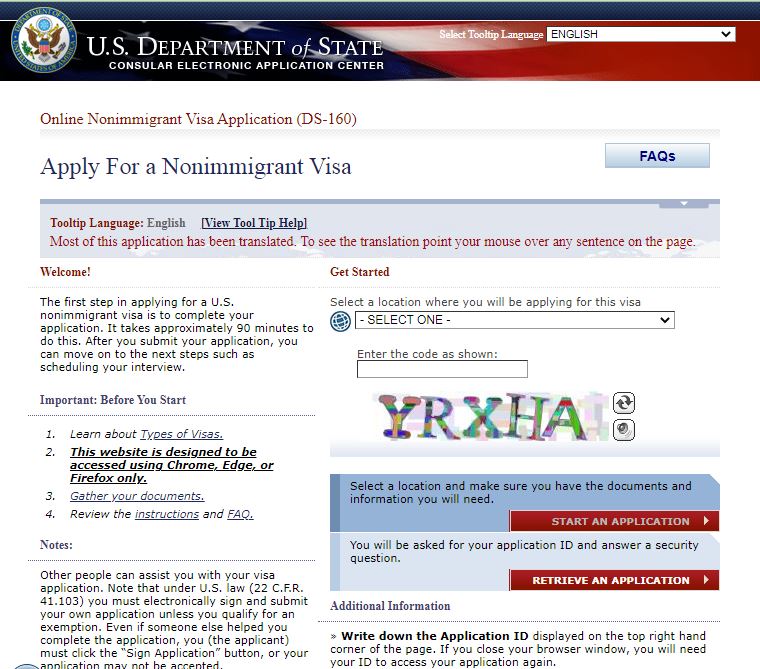


The DS-160 is the online application every F-1 applicant submits before booking the interview, and the consular officer has it open on the screen before you walk in. Most of it is tick boxes and dates. The small part that is free text, where you describe your work and explain any previous refusal, is the part that gets read, and it is where refused applications usually went wrong before the interview started. Since 18 June 2025 the form also requires every social-media handle you have used in five years, with profiles set to public. This page covers how to fill it, what has changed, and how an officer reads it.
Table of contents
What the DS-160 is and how it works
- It is completed online at the State Department’s CEAC portal, one application per person, in English.
- You can save and return to it; once submitted it cannot be edited. If you find an error after submitting, you complete a new DS-160 and update your appointment with the new confirmation number.
- The confirmation page with the barcode is what you bring to the interview, with your passport, I-20, SEVIS fee receipt and financial documents. The visa fee is paid separately after submission.
- The information must match your I-20, your passport and what you say in the interview. Officers compare them.
The social-media rule since June 2025
The DS-160 has asked for social-media identifiers since 2019. On 18 June 2025 the State Department made the online-presence review part of the vetting for all F, M and J applicants and instructed applicants to set all social-media profiles to public. The US Embassy in India followed with its own notice: omitting accounts can lead to refusal and to ineligibility for future visas.
What that means in practice:
- List every username or handle you have used on every platform in the last five years, including accounts you no longer use.
- Set the profiles to public before the interview. A private profile can be read as an attempt to hide activity.
- Expect delays. Applications that need extra review are put into administrative processing under 221(g) while it is done.
The F-1 social media rules page covers what officers look for and how to review your own accounts first.
The two fields that decide refused cases
Ninety per cent of the DS-160 is yes-or-no answers. Two fields ask you to write, and in the refused applications we review, those two fields are where the problem started.
“Briefly describe your duties.” In the work, education and training section, the form asks what you do or did. Some applicants write three words, some write three lines, some leave it blank. A blank or vague answer tells the officer nothing about you and leaves the interview to carry the whole case. Two or three plain sentences, in your own words, about what the job involved, is enough; it should match what you will say if asked.
“Have you ever been refused a US visa?” If yes, the form asks you to explain. The line that recurs in refused files is some version of “refused under 214(b) at Mumbai on [date]”. That is a fact, not an explanation. The officer already has the refusal record; what the field is for is your understanding of why, and what is different now. Written casually, it tells the officer the applicant has not thought about the first refusal, and the interview tends to confirm it.
The common thread is the approach. Many applicants treat the F-1 as a form to get through, and that casual approach begins on the DS-160, long before anyone is refused. Reading your own DS-160 the way the officer will, before you book, is the single cheapest improvement available.
A field-by-field checklist
- Personal and passport details: exactly as in the passport, including spelling and name order.
- Travel history: previous US visits and visas, and other countries visited in the last five years, with dates. Gaps and inconsistencies with your passport stamps are noticed.
- US contact and SEVIS: the school name, address and SEVIS ID from your I-20; the programme start date must match.
- Family: parents’ names and whether any relatives are in the US. Relatives in the US are not a problem; hiding them is.
- Work, education and training: every institution and employer, with dates, and the duties field written properly.
- Previous refusals: disclosed and explained, as above.
- Social media: every handle, five years, profiles public.
- Security questions: answered truthfully; a yes does not mean a refusal, a false no does.
- Review before submitting: read the whole form as the officer will, then submit. Keep the confirmation number.
How an officer reads your DS-160
A consular officer sees your DS-160 before they see you, and the questions you get are chosen from it. Three parts are read first:
- Previous refusals. If the form shows one, your explanation is read before anything else, and the interview starts from there.
- Work and education, including the duties field. The officer checks whether your education, your work and the programme on your I-20 form a sequence that makes sense.
- Ties and travel history. Family in the US, previous travel and current employment together answer the question the officer has to decide: will you return home.
Everything else is checked for consistency rather than read for meaning. These are the red flags noticed straight away:
- A DS-160 that contradicts the I-20 (school, programme, start date) or the passport.
- Duties described in a few words, or not at all.
- A refusal disclosed without explanation, or not disclosed.
- Social-media handles missing, or profiles set to private.
- Relatives in the US left out of the family section.
- Answers that read as if an agent wrote them: generic, identical across applicants, or in English the applicant cannot sustain in the interview.
None of these is an automatic refusal. Each one makes the interview harder than it needed to be. In our top-tier plans, mock interviews run by former US visa officers start from the applicant’s own DS-160, because what the form says is what the real interview will ask about.
How the DS-160 and the interview fit together
The interview is short. The officer has already formed a view from the DS-160 and the I-20, and the questions test that view: why this university, how it is funded, what you will do afterwards. A DS-160 that is complete and specific lets a short interview go well. A DS-160 with blank duties, an unexplained refusal and a missing social-media account turns the interview into an examination of the form. The F-1 interview questions guide covers the questions; the interview rule changes cover what has changed at the posts.
FAQ
Next steps
Fill the DS-160 yourself, read it as an officer would, then book. If you have been refused before, the guide to getting a visa after 214(b) and the F-1 refusal reasons page cover what to change before the next attempt; the Study in USA page covers the full route.
Not the submitted form. You complete a new DS-160, then update the appointment profile with the new confirmation number before the interview. Bring the new confirmation page.
Yes. The requirement is every handle used in the last five years, including inactive accounts. The US Embassy in India has said omissions can lead to refusal and future ineligibility.
Two or three plain sentences about what the job involved, in your own words, consistent with your CV and what you will say in the interview. Do not leave it blank.
State the date and post, say what you understand the officer’s concern to have been, and what is different in this application. Keep it factual and short; the detail belongs in the interview.

The Bluehawks Editorial Team is a collaborative group of study-abroad specialists, counselors, researchers, and content experts dedicated to delivering accurate, practical, and up-to-date guidance for students planning to study overseas. Our content combines real-world experience, verified information, and deep insights into global education systems, admissions processes, visas, scholarships, and career pathways.
We create clear, student-focused resources designed to simplify complex decisions and help you explore the best opportunities across top study destinations. From application strategies to post-study outcomes, our goal is to provide trustworthy, transparent, and actionable information to support you at every step of your international education journey.