F1 Visa Social Media Rules: What Indian Students Need to Know


Ask a WhatsApp group what the US checks on your social media before an F1 interview and you’ll get a different answer from everyone in it. Too many followers. Travel photos. Political posts. American connections on LinkedIn. A private account. An account that’s too empty. Someone will know a cousin who was refused for one of them.
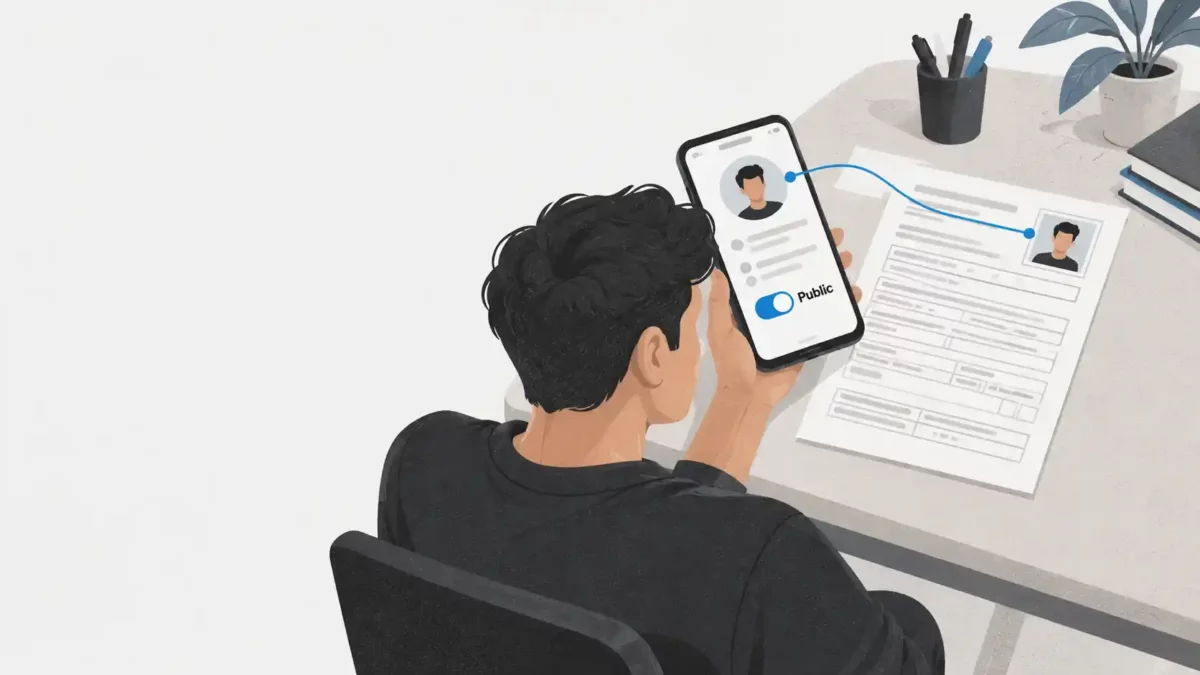
What the State Department has actually published on the subject fits on two pages. Since June 2025, student and exchange visitor applicants have been subject to an online presence review, and they’re instructed to set their social media profiles to public. The DS-160 has asked for social media identifiers since 2019. That’s the official position in full. Everything beyond it is either reporting on internal guidance, which is worth knowing and worth labelling as such, or guesswork.
This guide separates the three. It covers what you’re required to provide, what the review is for, whether to go public or delete things, and the one issue that causes real problems: an online profile that contradicts your DS-160.
Table of contents
- The short answers
- What the US actually requires of your social media
- What “online presence review” means, and what hasn’t been published
- Should you make your social media public, and should you delete old posts?
- What if your social media doesn’t match your DS-160?
- F1 visa social media checklist
- Frequently asked questions
- After a 214(b) refusal, and what to do next
The short answers
| Question | Answer |
|---|---|
| Does the US check social media for F1 visa applicants? | Yes. F-1, F-2, M-1, M-2, J-1 and J-2 applicants have been subject to online presence review since June 2025. |
| What do I have to provide? | The usernames you’ve used on the listed platforms in the last five years, on the DS-160. Never passwords. |
| Public or private? | You’re instructed to set all your social media profiles to public or open. |
| Can one post get me refused? | No rule says so. Eligibility is decided on the whole file. Content that contradicts your DS-160 is the real risk. |
| Should I delete everything? | No. A freshly emptied account is more conspicuous than an ordinary one. |
| Does it end with the F1? | No. H-1B and H-4 applicants have been under the same review since December 2025, and the list keeps growing. |
What the US actually requires of your social media
There are two requirements, and they arrived six years apart.
Since 2019: identifiers on the DS-160. The form lists a set of platforms and asks for every username or handle you’ve used on them in the five years before you apply. You give the identifier, not the password; the State Department’s own guidance says consular officers neither ask for passwords nor can change your privacy settings. If you’ve never used the listed platforms, you select “None”, and the Department says that answer on its own is not a reason for refusal (State Department FAQ). The US Embassy in India has repeated the point publicly: list everything from the last five years, passwords not required, and certify that the form is truthful and complete.
Since June 2025: public profiles and an online presence review. Student and exchange visitor applicants are now instructed to set the privacy settings on all their social media profiles to public or open, so that officers can review their online presence as part of vetting. The Department’s current notice lists F-1, M-1, F-2, M-2, J-1 and J-2 among the categories covered, alongside H-1B and H-4 (added in December 2025), and a longer list added through 2026 (State Department, updated 18 September 2026). The stated purpose is to identify applicants who are inadmissible, including on security grounds, and to confirm that each applicant can credibly establish eligibility for the visa and a genuine intent to abide by its terms.
That second sentence is the one to read twice. The review isn’t only about security. It’s also one more way of checking that the student in front of the officer is the student described in the file.
Two practical consequences. First, an account you deleted in 2023 still counts as one you used in the last five years: the question is about identifiers used, not accounts that still exist. Second, the review doesn’t end when you get the F1. If you go on to an H-1B, you’ll be making your profiles public again for the stamping interview, so a consistent online record is worth more than a tidy one.
What “online presence review” means, and what hasn’t been published
The Department has published the instruction and the purpose. It has not published a method.
What is known beyond the official notice comes from the June 2025 guidance sent to consular posts, which was summarised at the time by immigration law firms and the press rather than released in full (Miller Mayer, June 2025). According to those accounts:
- Officers review an applicant’s whole online presence, not only the accounts named on the DS-160, and look for signs of hostility towards the United States, its institutions or its people, and for whether the applicant will respect US law and keep to the terms of the visa.
- A missing public presence, or a refusal to make accounts accessible, is treated as a flag.
- Officers take screenshots of what they find.
- If nothing adverse is found, the officer can decide the case. If something is found, the case is refused under the relevant section or the applicant is called back for a second interview. An applicant who is otherwise eligible can be placed under 221(g) while the review is completed.
That last point explains something students report: the interview went fine, nothing about social media came up, and the result was still a 221(g) slip. The review can happen after you leave the window.
What has not been published, anywhere, is a scoring system. There is no official list of risky platforms, no follower threshold, no rule about travel photos, no instruction to penalise political opinions, and no formula that turns your Instagram into a number. Anyone describing one is describing their own guess. Treat claims like these as the folklore they are:
- “Too many American connections on LinkedIn will get you refused.”
- “Delete your travel photos; they show you can afford to stay.”
- “A private account means automatic rejection.”
- “Officers have a 2026 algorithm that maps your digital ecosystem.”
The honest summary is narrower and more useful. The review looks for two things: whether you’re someone the US doesn’t want to admit, and whether what you’ve said about yourself holds up. For almost every Indian student, only the second one is in play.
Should you make your social media public, and should you delete old posts?
Public. This isn’t a judgement call any more. The instruction for F, M and J applicants is to set every profile to public or open, and the reported guidance treats a locked or absent presence as something to flag. A private account is not an automatic refusal, but it’s the one thing on this page that can turn a routine interview into a second one. Switch before you submit the DS-160, not the morning of the interview, so the accounts you’ve listed are the accounts the officer can see.
Deleting. Your accounts are yours, and removing a post you regret isn’t misrepresentation. Three cautions, though. First, deleting an account doesn’t remove it from the five-year question; you still list it. Second, officers screenshot what they find, and the reported guidance notes that some applicants wiped their accounts before interviews, which is exactly the pattern that draws attention: a public profile with ten years of history and nothing on it reads as concealment, not caution. Third, a purge removes the evidence that helps you. An ordinary account showing your college fest, your internship, your family and your city supports the story in your file. A blank one supports nothing.
The standard to aim for is an account a stranger could read and recognise as the person described in your DS-160. Not a brochure, not a blank.
What if your social media doesn’t match your DS-160?
This is where the real risk sits, and it’s rarely a dramatic post. It’s a profile that tells a different story from the form.
The contradictions we see most often:
- LinkedIn says one thing about your career, the DS-160 says another. A headline reading “Open to work: United States” or “Relocating to the US in 2027” while your interview answer is a plan to return to India. An employer, job title or date that doesn’t match the employment history on the form.
- Education that doesn’t line up. A degree listed with different years, a different institution, or a specialisation the form doesn’t mention.
- Location. An Instagram or Facebook location set to a US city before you’ve been issued a visa, usually because a relative lives there.
- A business the form doesn’t know about. A side venture, a freelance page, a shop on Instagram, none of it in the DS-160’s employment section.
- Travel. Photographs from a trip that isn’t in the travel history you declared.
- An account you didn’t list. An old Twitter handle, a second Instagram, a forgotten Facebook profile from Class 12. This is a disclosure problem, not a content problem, and disclosure problems are the ones the form warns about.
None of these is a refusal by itself. All of them are questions, and a student who hasn’t noticed the contradiction answers the question badly.
The test is simple. Open each public profile as a stranger and compare it line by line with your DS-160: education, employer, dates, location, travel, and the list of identifiers. A typo or an out-of-date bio is a fix. A story that differs from the form is something you must either correct on the form or be ready to explain in one sentence, truthfully.
If you find the error after submitting the DS-160, don’t guess. The usual route is a new DS-160 and an updated confirmation number on your appointment profile, but follow your consulate’s current instructions. Our DS-160 guidecovers the fields officers compare against your answers.
F1 visa social media checklist
Do this before you submit the DS-160, not before the interview. The list of identifiers goes on the form, and the profiles need to be public by the time anyone looks.
- Write down every platform and username you’ve used in the last five years, including deleted accounts and the ones from school
- Enter each identifier on the DS-160 exactly as it appears on the platform
- Set every listed profile to public or open
- Compare LinkedIn with the form: headline, employer, title, dates, education, location
- Remove “open to work in the US” style signals that contradict your stated plan, or change the plan you state
- Check Instagram and Facebook bios and locations for a US city or a job you haven’t declared
- Check that any business, freelance work or shop you run is in the employment section
- Check recent travel photos against the travel history you declared
- Read your public profiles as a stranger would, once, start to finish
- Don’t wipe accounts, don’t create new ones for the visa, don’t change your name on any of them
Most of this takes one evening. The students who get caught out are not the ones with an unusual online life; they’re the ones who never looked.
Frequently asked questions
Yes, if you’ve listed it, and possibly if you haven’t. F-1 applicants are subject to online presence review, and Instagram is one of the platforms the DS-160 asks about. The reported guidance says officers look at an applicant’s whole online presence, not only the accounts on the form.
LinkedIn is the account most likely to contradict your DS-160, because it carries your education, employment and career intentions in writing. Make sure the headline, dates and employer match the form.
Yes. The State Department instructs F, M and J applicants to set the privacy settings on all their social media profiles to public or open. Do it before you submit the DS-160.
Five. You list every identifier you’ve used on the listed platforms in the five years before you apply, including accounts you’ve since deleted. Passwords are never requested.
It can contribute to one. There is no published rule that a particular post or platform leads to refusal, but the review is part of vetting, and content that contradicts your DS-160 or suggests you won’t keep to the visa’s terms can lead to a refusal, a second interview or a 221(g) while the review is completed.
Add it. The form asks for everything used in the last five years, and leaving out an account is a disclosure problem, which is worse than anything the account contains. If the form is already submitted, follow your consulate’s instructions for correcting it, which usually means a new DS-160.
Not as a strategy. Removing a post you regret is your choice, but a wiped account is more conspicuous than an ordinary one, and officers screenshot what they see. Review, correct what’s wrong, and leave the rest.
A 214(b) refusal is rarely a social-media problem on its own. It means the officer wasn’t persuaded on your plan or your intent. Check your online presence for contradictions as part of rebuilding the case, but don’t expect a changed Instagram profile to change the outcome.
After a 214(b) refusal, and what to do next
If you’ve been refused under 214(b), start with the file, not the feed. What a refusal means and how to rebuild the case is on F1 visa rejected under 214(b): what to do next and how to get the visa after a 214(b). The online-presence check belongs in that rebuild as one item: find the contradictions, fix the form, and be ready to explain what changed.
For everyone else, the order is: identifiers on the DS-160, profiles public, profiles consistent with the form, then prepare for the questions that actually decide the interview. Those are on F1 visa interview questions and answers, with a free PDF.
If you want your DS-160 and profiles checked before you submit
Our F1 interview prep includes a DS-160 review before submission and mock interviews that push back on your answers. It’s for students who have decided on the US. If you’re keeping another country as a fallback in case the visa fails, that usually shows at the window, and it isn’t something preparation should paper over.
F1 visa interview prep for first-timers · F1 visa refusal support · chat support is available round the clock on WhatsApp

The Bluehawks Editorial Team is a collaborative group of study-abroad specialists, counselors, researchers, and content experts dedicated to delivering accurate, practical, and up-to-date guidance for students planning to study overseas. Our content combines real-world experience, verified information, and deep insights into global education systems, admissions processes, visas, scholarships, and career pathways.
We create clear, student-focused resources designed to simplify complex decisions and help you explore the best opportunities across top study destinations. From application strategies to post-study outcomes, our goal is to provide trustworthy, transparent, and actionable information to support you at every step of your international education journey.